The Effect of Virtual Hotel Tours on The Speaking Skills of Eleventh Grade Students in The Hospitality Department at SMK PGRI 1 Giri Banyuwangi in The 2024/2025 Academic Year
DOI:
https://doi.org/10.46838/jbic.v6i2.1069Keywords:
Speaking Skill, Virtual Hotel Tours, Hospitality English, Pre- Experimental DesignAbstract
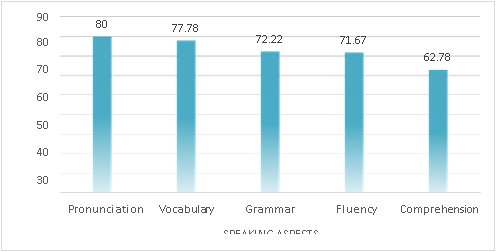
Speaking is a crucial component of language proficiency that supports students' communication skills, particularly in vocational contexts such as hospitality. This study was conducted to examine the effect of Virtual Hotel Tours on the speaking skills of eleventh-grade students in the Hospitality Department at SMK PGRI 1 Giri Banyuwangi during the 2024/2025 academic year. A pre-experimental design with a one-group pretest- posttest approach was employed. The participants consisted of 36 students from the eleventh-grade Hospitality class. Data were collected using a speaking performance test based on five aspects: pronunciation, grammar, vocabulary, fluency, and comprehension, and analyzed using SPSS version 27. The results showed a significant improvement in speaking scores, with the mean score increasing from 56.78 in the pre-test to 73.89 in the post-test. The Paired Sample T-Test revealed a t-value of 38.919, which exceeded the t- table value of 2.030, with a significance level below 0.05, indicating a statistically significant difference. These findings suggest that the use of Virtual Hotel Tours had effect on students’ speaking skills, particularly in the aspects of fluency, pronunciation, grammar, vocabulary, and comprehension, with pronunciation showing the highest improvement compared to the other aspects.
References
Costa, F., & Mastellotto, L. (2022). The role of English for specific purposes (ESP) in supporting the linguistic dimension in English-medium instruction (EMI). CLIL: Journal of Innovation and Research in Plurilingual and Pluricultural Education, 5(2), 37-52. https://doi.org/10.5565/rev/clil.91
Fortanet-Gómez, I., & Räisänen, C. A. (Eds.). (2008). ESP in European higher education: Integrating language and content. John Benjamins Publishing. https://doi.org/10.1075/aals.4
Bolton, K., & Jenks, C. (2022). World Englishes and English for specific purposes (ESP). World Englishes, 41(4), 495-511. https://doi.org/10.1111/weng.12604
Nguyen, N. V., Vo, T. L., Van Nguyen, T. T., & Nguyen, T. H. (2021). Effectiveness of second life virtual learning environment for language training in hospitality and tourism. In Proceedings of the AsiaCALL International Conference, 17(1), 19–28. https://doi.org/10.2991/assehr.k.210226.003
Fakish, M. (2024). Improving English Proficiency in Indonesia: Using Literary Works and Educational Challenges. English Language and Arts Education Journal, 1(2)108-117. https://doi.org/10.31004/elaej.v1i2.14
Merta, L. W., Ratminingsih, N. M., & Budasi, I. G. (2023). The integration of technology in English language teaching to stimulate students’ critical thinking. Language Circle: Journal of Language and Literature, 17(2), 333–341. https://doi.org/10.15294/lc.v17i2.39097
Alfaro, L., Rivera, C., Suarez, E., & Raposo, A. (2022). 360 virtual reality video tours generation model for hostelry and tourism based on the analysis of user profiles and case-based reasoning. International Journal of Advanced Computer Science and Applications, 13(11), 751–760. https://doi.org/10.14569/IJACSA.2022.0131187
Eissa, S. M. (2021). The effectiveness of Online Virtual Tours in Developing EFL Speaking Skills among Secondary School Students. Egyptian Journal of Educational Sciences, 1(1), 109-136. https://doi.org/10.21608/ejes.2021.202981
Sonnonschein, K., & Ferguson, J. (2020). Developing professional communication skills: Perceptions and reflections of domestic and international graduates. Journal of University Teaching & Learning Practice. 17(3), Article 5. https://doi.org/10.53761/1.17.3.5
Creswell, John W. 2014. Research Design: Qualitative, Quantitative, and Mixed Methods Approaches. Edisi ke-4. California: SAGE Publications.
Yan, Z., Wang, L., & Chen, M. (2023). Enhancing EFL learners’ pronunciation and vocabulary acquisition through virtual simulation environments. Computer Assisted Language Learning, 36(5), 455–472. https://link.springer.com/article/10.1007/s10055-024-01061-5
Lin, T. J., & Lan, Y. J. (2015). Language learning in virtual reality environments: Past, present, and future. Journal of Educational Technology & Society, 18(4), 486-497. https://www.jstor.org/stable/jeductechsoci.18.4.486
Ahmadi, S. M. (2018). The use of technology in English language learning: A literature review. International Journal of Research in English Education, 3(2), 115–125. https://doi.org/10.29252/ijree.3.2.115
Field, A. (2024). Discovering Statistics Using IBM SPSS Statistics (6th ed.). Thousand Oaks, CA: SAGE Publications Ltd.
Pramasta, R. G., Setiyadi, A. B., & Yufrizal, H. (2023). Teaching English for Hospitality Through Virtual-Reality Based Learning to Improve Students’ Speaking Achievement. IOSR Journal of Research & Method in Education, 13(4 Ser. I), 28-33. https://doi.org/10.9790/7388-1304012833
Published
How to Cite
Issue
Section
Copyright (c) 2025 Rachel Ayundi Tata Riski, Miftah Ayufiyanda Anggraini, Nur Alvy Sahrin, Najwa Aprilianti Susanto, Wageyono

This work is licensed under a Creative Commons Attribution-ShareAlike 4.0 International License.